


Where the route goes
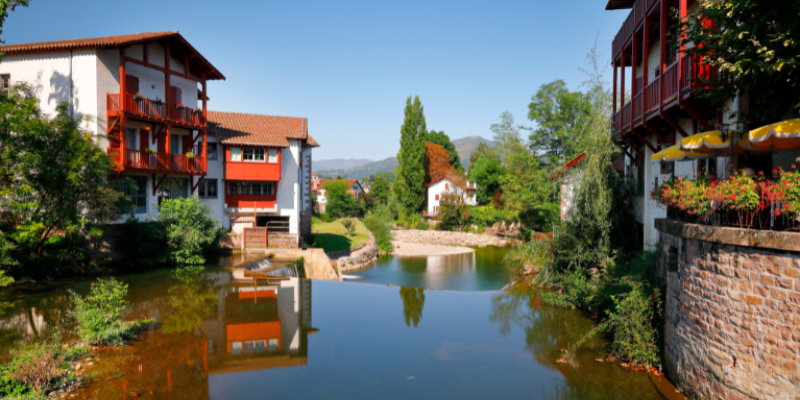
The full route runs from Le Puy-en-Velay, a striking town built around volcanic outcrops in the Auvergne, to Saint-Jean-Pied-de-Port, at the foot of the Pyrenees on the French-Spanish border. From there, the Camino continues into Spain toward Santiago — but the French stretch is a complete, satisfying route in its own right.
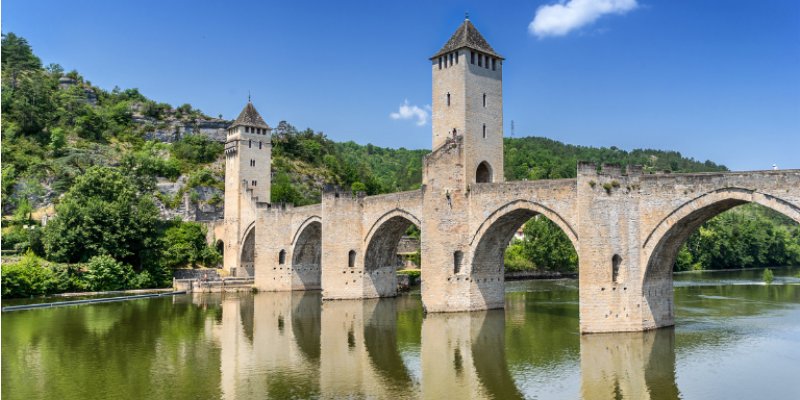
Along the way, the route crosses the Aubrac plateau, the Lot valley, and the hills of Quercy and Gascony, passing through towns with centuries of pilgrim history: Conques, with its Romanesque abbey; Espalion and Estaing on the Lot; Figeac; and Cahors, with its fortified medieval bridge.
What the terrain is like
This is the most physically demanding of our French routes, and it's worth being upfront about why: the Massif Central isn't flat. Expect genuine climbs, particularly in the early stages out of Le Puy-en-Velay and across the Aubrac plateau, followed by gentler, though still rolling, terrain further southwest.
Difficulty: Level 3–4 (Moderate to strenuous)On our grading scale, this route suits cyclists who ride regularly, rather than a first cycling holiday.
Cycling vs. walking the Camino
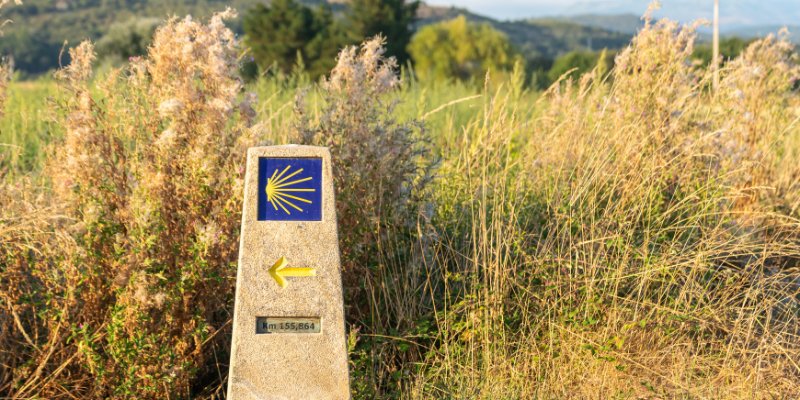
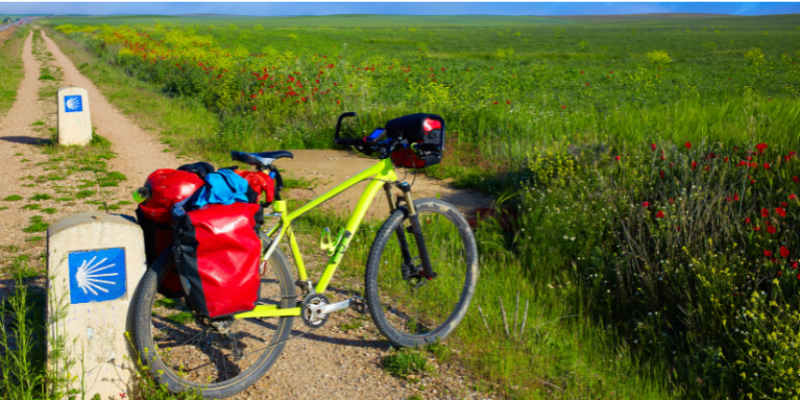
The Via Podiensis is best known as a walking pilgrimage — most of the guidebooks and waymarking are written with hikers in mind, and the traditional GR65 hiking path isn't always rideable in full. A cycling route follows the same corridor but takes practical alternatives (quiet back roads, adapted sections) where the hiking path isn't suitable for a bike. You'll pass the same towns, abbeys, and landscapes; the day-to-day logistics — and how quickly you cover ground — are simply different.
How a self-guided version works
As with our other routes, you don't need a guide riding alongside you.
You get:
- Daily route: a day-by-day route via our GUIBO app, with the diversions needed to keep the ride bike-appropriate
- Accommodation: booked in advance along the route, in towns and villages with real pilgrim history
- Luggage transfer: transferred ahead each day, so you're climbing with just a light daypack
- Support: a support number, in case a stage proves tougher than expected or you need help mid-route
Who this route suits
If you're an experienced or regularly cycling rider looking for something with more physical and historical substance than a flat riverside route, this is a strong fit. If you're newer to cycling holidays, we'd point you toward an easier route first — the Canal du Midi or the Loire Valley — and save the Camino for when you've got a few trips under your belt.
Ready to plan your route?
Cover the complete stretch from Le Puy-en-Velay to Saint-Jean-Pied-de-Port, organised self-guided from start to finish.
See our full Le Puy Camino trip